Published
2026-02-11
Issue
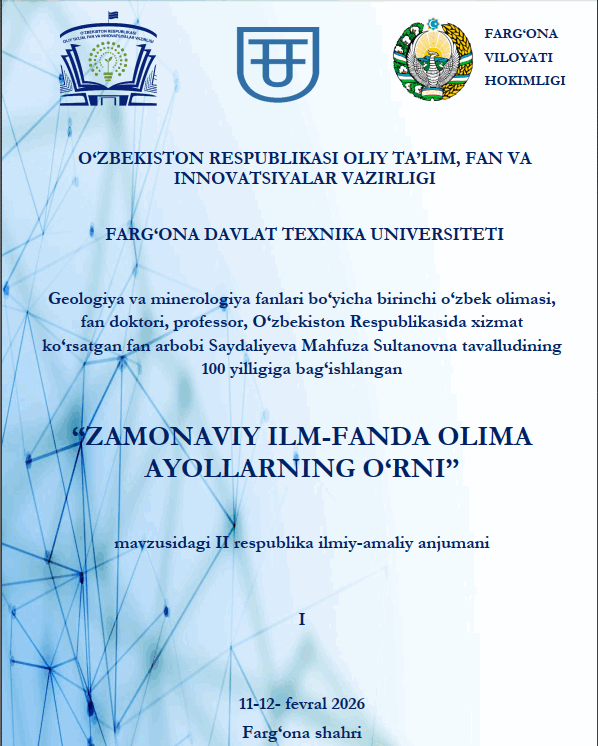
2026: “Zamonaviy ilm-fanda olima ayollarning o‘rni” mavzusidagi II respublika ilmiy-amaliy anjumani
Section
Articles

How to Cite
ПРИНЦИПЫ И ПОДХОДЫ К ПОСТРОЕНИЮ МЕТОДИКИ ИНКЛЮЗИВНОГО ОБРАЗОВАНИЯ С ТОЧКИ ЗРЕНИЯ НАУЧНОЙ КОМПЕТЕНТНОСТИ
Гимаева Л.М.
Андижанский государственный технический институт
Abstract
Аннотация. В условиях трансформации высшего образования и расширения практик инклюзивного обучения особую актуальность приобретает разработка методик, ориентированных не только на доступность образовательной среды, но и на развитие научной компетентности обучающихся. В статье рассматриваются ключевые принципы и методологические подходы к построению методики инклюзивного образования с позиции формирования научной компетентности как интегративного качества личности. Анализируются системный, компетентностный, деятельностный и личностно-ориентированный подходы, раскрывается их роль в обеспечении равных образовательных возможностей для обучающихся с различными образовательными потребностями. Обосновывается необходимость перехода от адаптационного понимания инклюзии к научно обоснованной педагогической модели, ориентированной на развитие исследовательского мышления, рефлексии и познавательной самостоятельности.
Ключевые слова: инклюзивное образование; научная компетентность; методика обучения; компетентностный подход; системный подход; высшее образование; образовательная инклюзия
Annotatsiya. Oliy ta'limning o‘zgarishi va inklyuziv ta'lim amaliyotining kengayishi bilan nafaqat ta'lim muhitining mavjudligiga, balki talabalarning ilmiy kompetentsiyasini rivojlantirishga qaratilgan usullarni ishlab chiqish ayniqsa dolzarbdir. Ushbu maqolada inklyuziv ta'lim usullarini integrativ shaxs xususiyati sifatida ilmiy kompetentsiyani rivojlantirish nuqtai nazaridan rivojlantirishning asosiy tamoyillari va metodologik yondashuvlari ko‘rib chiqiladi. Tizimli, kompetentsiyaga asoslangan, faoliyatga asoslangan va talabaga yo‘naltirilgan yondashuvlar tahlil qilinadi, ularning turli ta'lim ehtiyojlariga ega talabalar uchun teng ta'lim imkoniyatlarini ta'minlashdagi roli ochib beriladi. Inklyuziyani adaptiv tushunishdan tadqiqot fikrlash, mulohaza yuritish va kognitiv mustaqillikni rivojlantirishga qaratilgan ilmiy asoslangan pedagogik modelga o‘tish zarurati asoslanadi.
Kalit so‘zlar: inklyuziv ta'lim; ilmiy kompetentsiya; o‘qitish usullari; kompetentsiyaga asoslangan yondashuv; tizimli yondashuv; oliy ta'lim; ta'lim inklyuziyasi
Abstract. With the transformation of higher education and the expansion of inclusive education practices, the development of methods focused not only on the accessibility of the educational environment but also on the development of students' scientific competence is particularly relevant. This article examines key principles and methodological approaches to developing inclusive education methods from the perspective of developing scientific competence as an integrative personality trait. Systemic, competency-based, activity-based, and student-centered approaches are analyzed, revealing their role in ensuring equal educational opportunities for students with different educational needs. The need for a transition from an adaptive understanding of inclusion to a scientifically grounded pedagogical model focused on the development of research thinking, reflection, and cognitive independence is substantiated.
Keywords: inclusive education; scientific competence; teaching methods; competency-based approach; systems approach; higher education; educational inclusion
References
1. UNESCO. (2017). A Guide for Ensuring Inclusion and Equity in Education. Paris: UNESCO.
2. Florian, L., & Black-Hawkins, K. (2011). Exploring inclusive pedagogy. Cambridge Journal of Education, 41(4), 813–828. https://doi.org/10.1080/0305764X.2011.625009
3. Rychen, D. S., & Salganik, L. H. (2003). Key Competencies for a Successful Life and a Well-Functioning Society. Göttingen: Hogrefe & Huber.
4. Biggs, J., & Tang, C. (2011). Teaching for Quality Learning at University. Maidenhead: Open University Press.
5. Федеральный закон от 03.05.2012 г. № 46 - ФЗ «О ратификации Конвенции о правах инвалидов//Гарант: информационно-правовое обеспечение [электронный ресурс]. – URL:http://base.garant.ru/70170066/
6. Ainscow, M. (2005). Developing inclusive education systems: What are the levers for change? Journal of Educational Change, 6(2), 109–124. https://doi.org/10.1007/s10833-005-1298-4
7. Booth, T., & Ainscow, M. (2016). Index for Inclusion: Developing Learning and Participation in Schools. Bristol: Centre for Studies on Inclusive Education.
8. Гимаева Лилия Маскуровна. Психолого-педагогические условия развития научной компетентности обучающихся с ОВЗ// Научно-методологический журнал, Научно-инновационные исследования в социально-гуманитарной сфере., № 2 (4) 2025 с 74-81
9. Atajonova S.B., Gimaeva L.M., Yusupova L.F. Modern regulatory and legal framework for inclusive education in technical universities // Proceedings of the 52nd All-Russian Scientific and Technical Conference of Young Scientists, Postgraduates and Students with International Participation. Ufa, 2025. Pp. 775-779.
10. Atajonova S. B,. Models and Mechanisms for Implementing an Inclusive Approach in Engineering Education Based on Artificial Intelligence// International Journal of Pedagogics 5.05 (2025): 110-114.